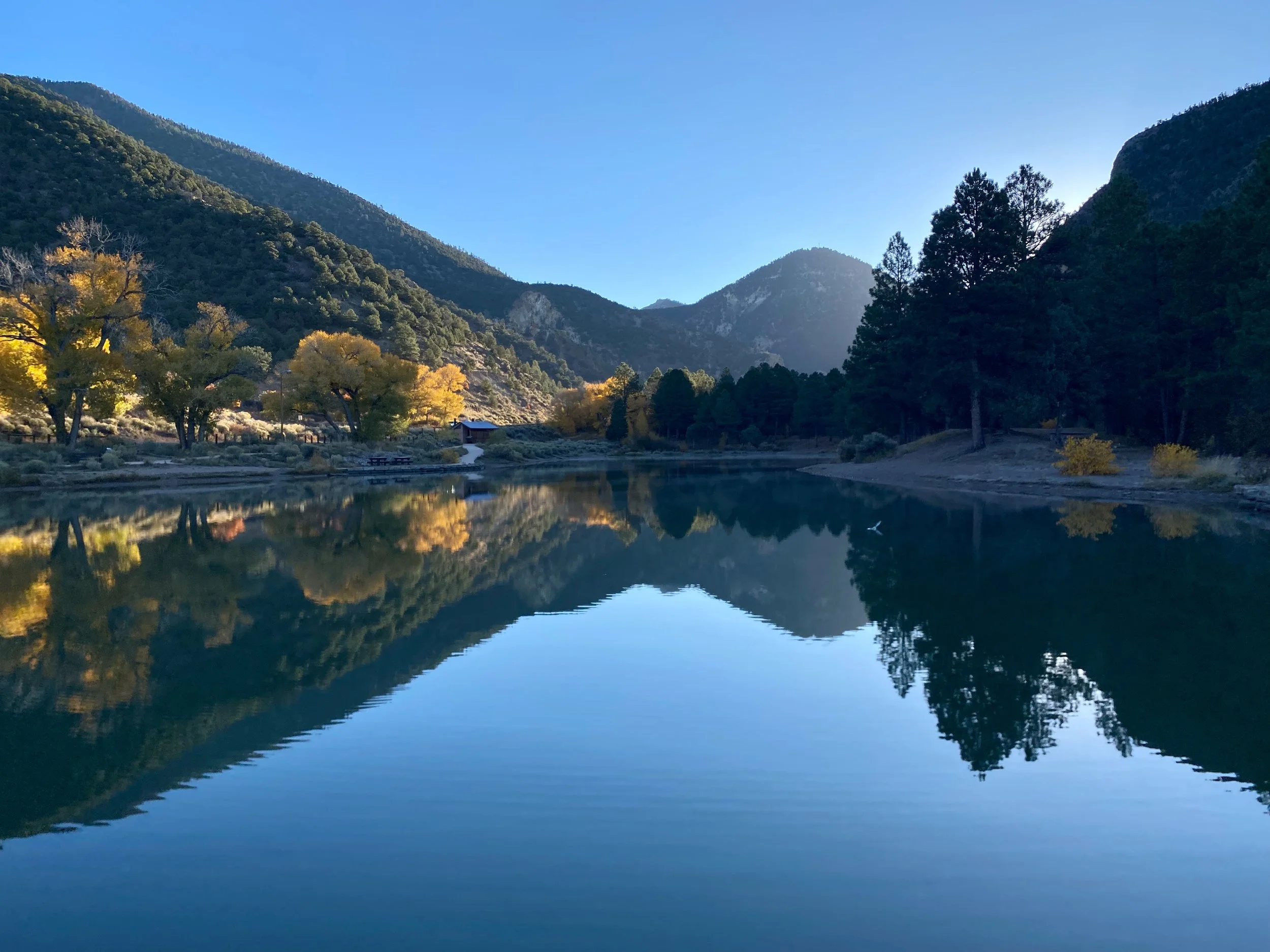
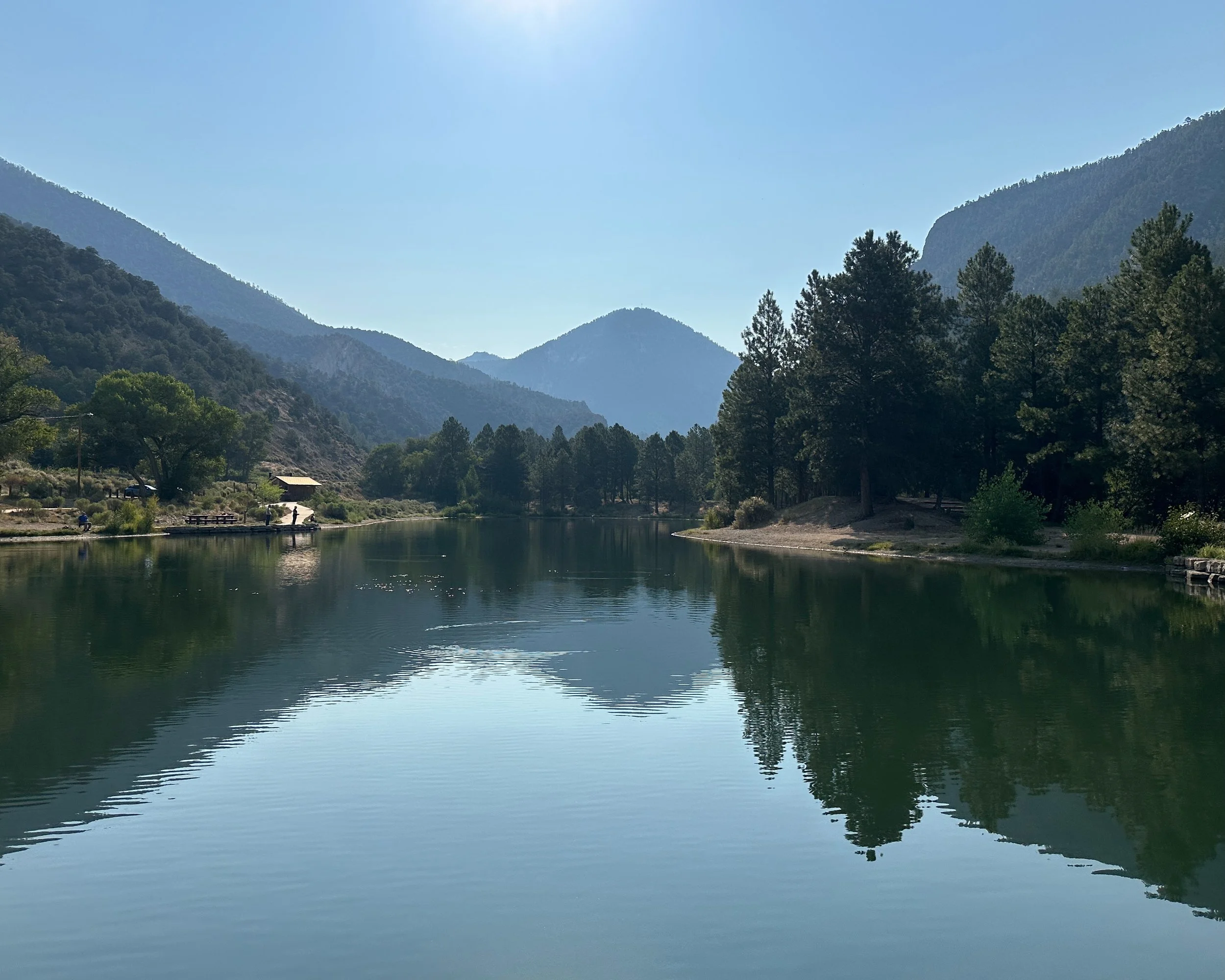
Imprints of Belonging is an art and re-storying project born at Eagle Rock Lake, within Carson National Forest, Questa, New Mexico. The project invites people to slow down, begin to connect to self , each other, earth, air, water as well as the plants, animals , insects for whom this place is home.
Through drawing, painting, cyanotype, photography, sound, material experiments, gatherings and acts of care, the project finds, follows and forms ties that connect us to place, one another, and more than human worlds.
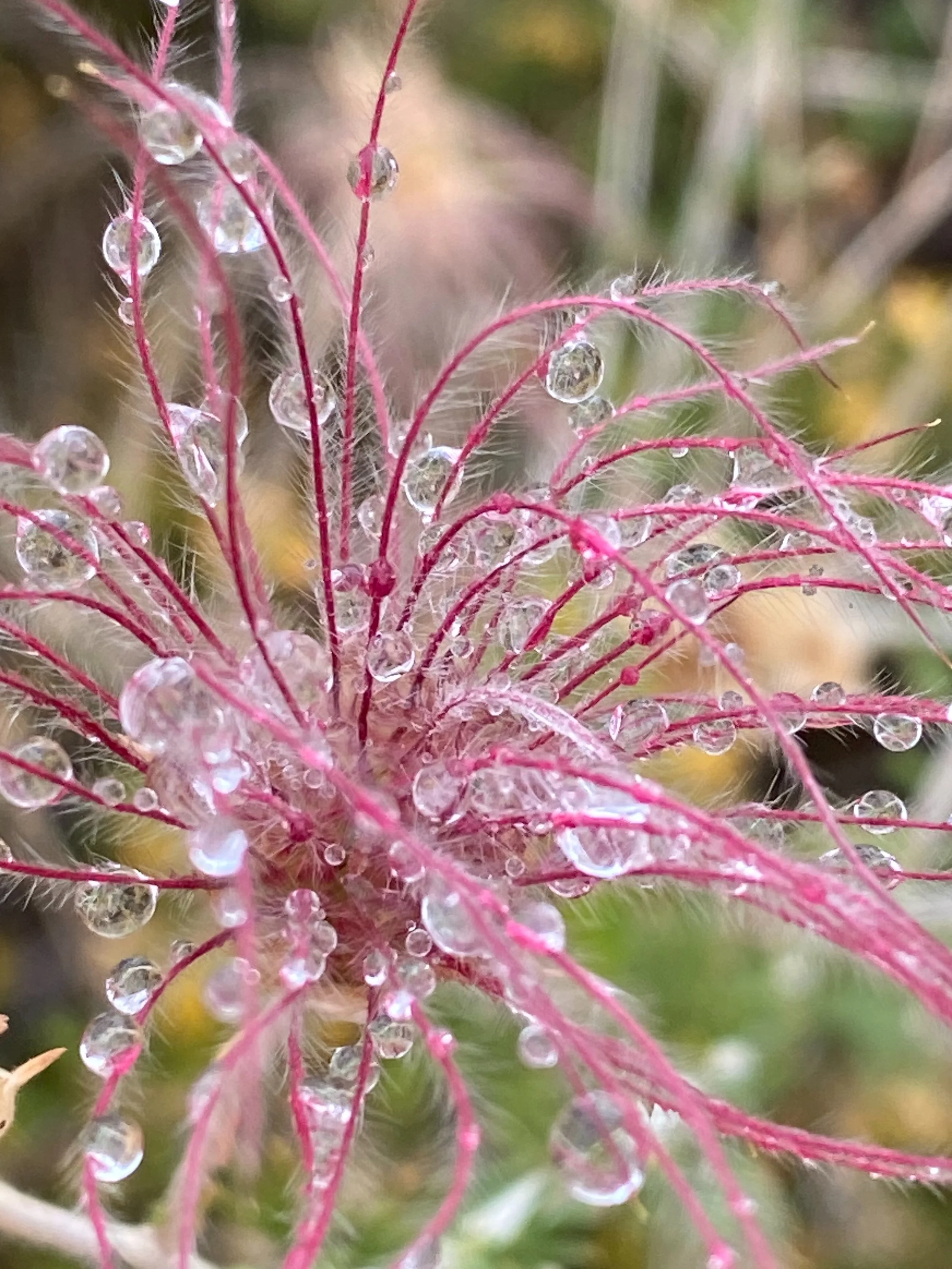
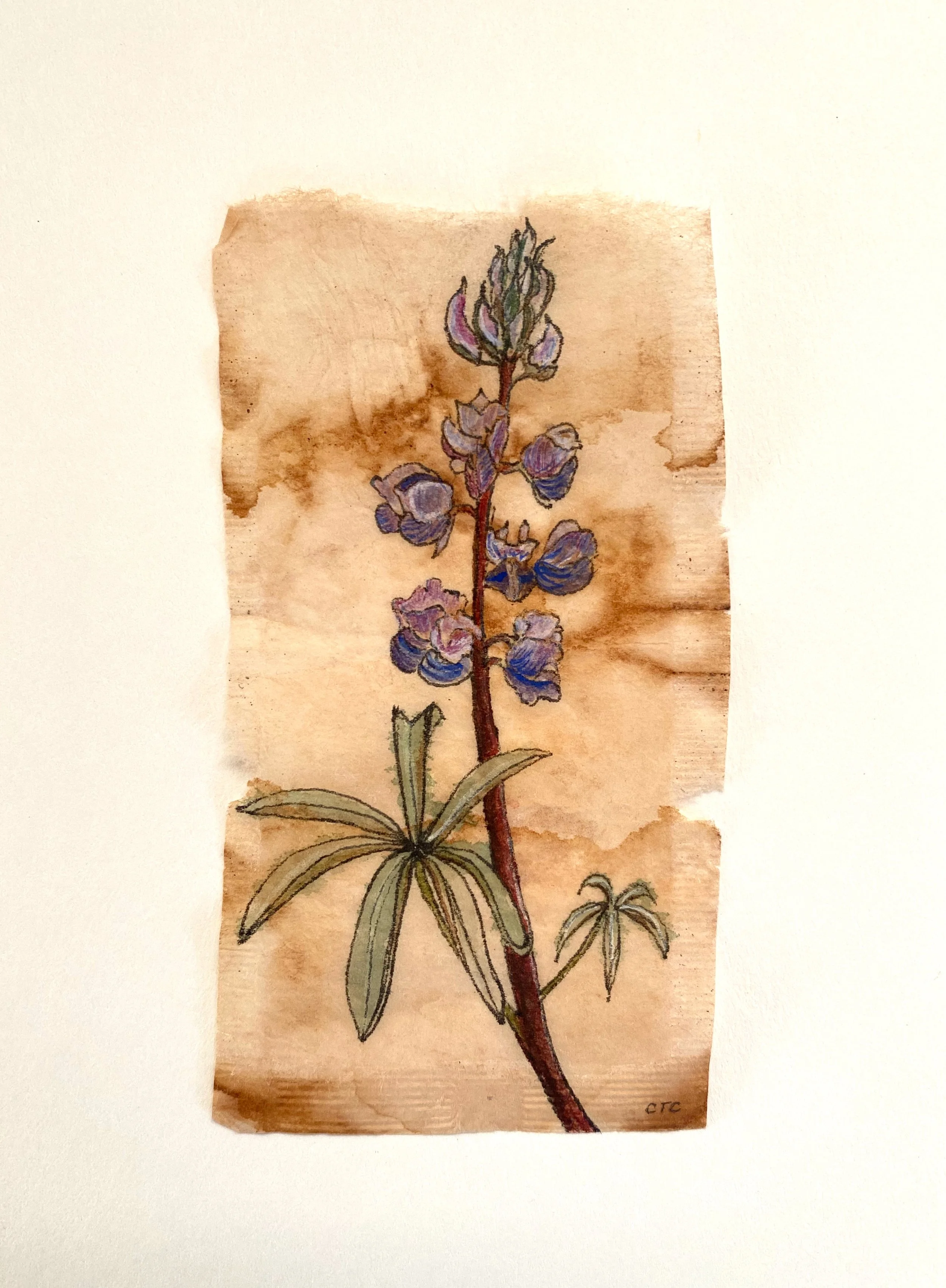
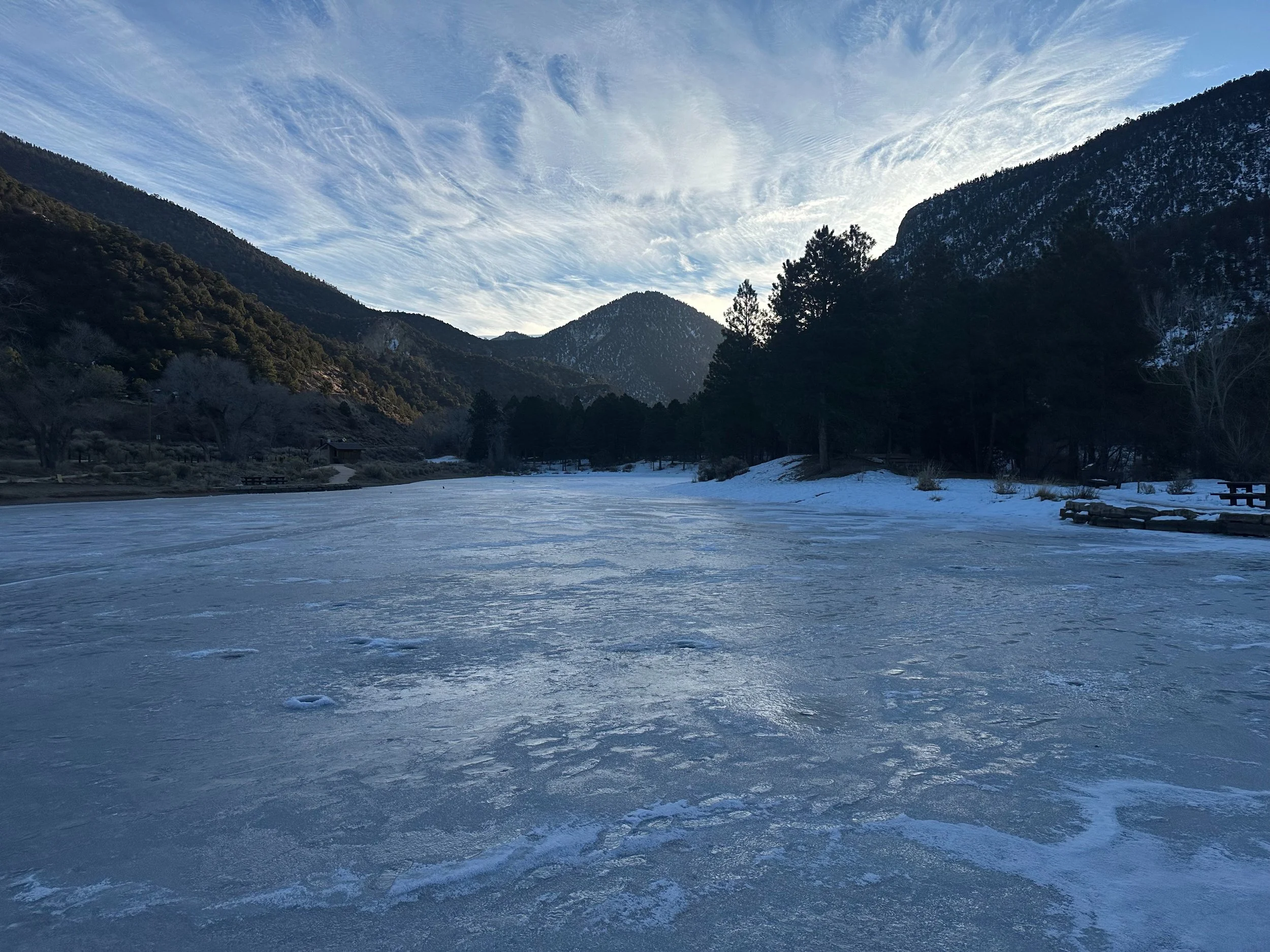
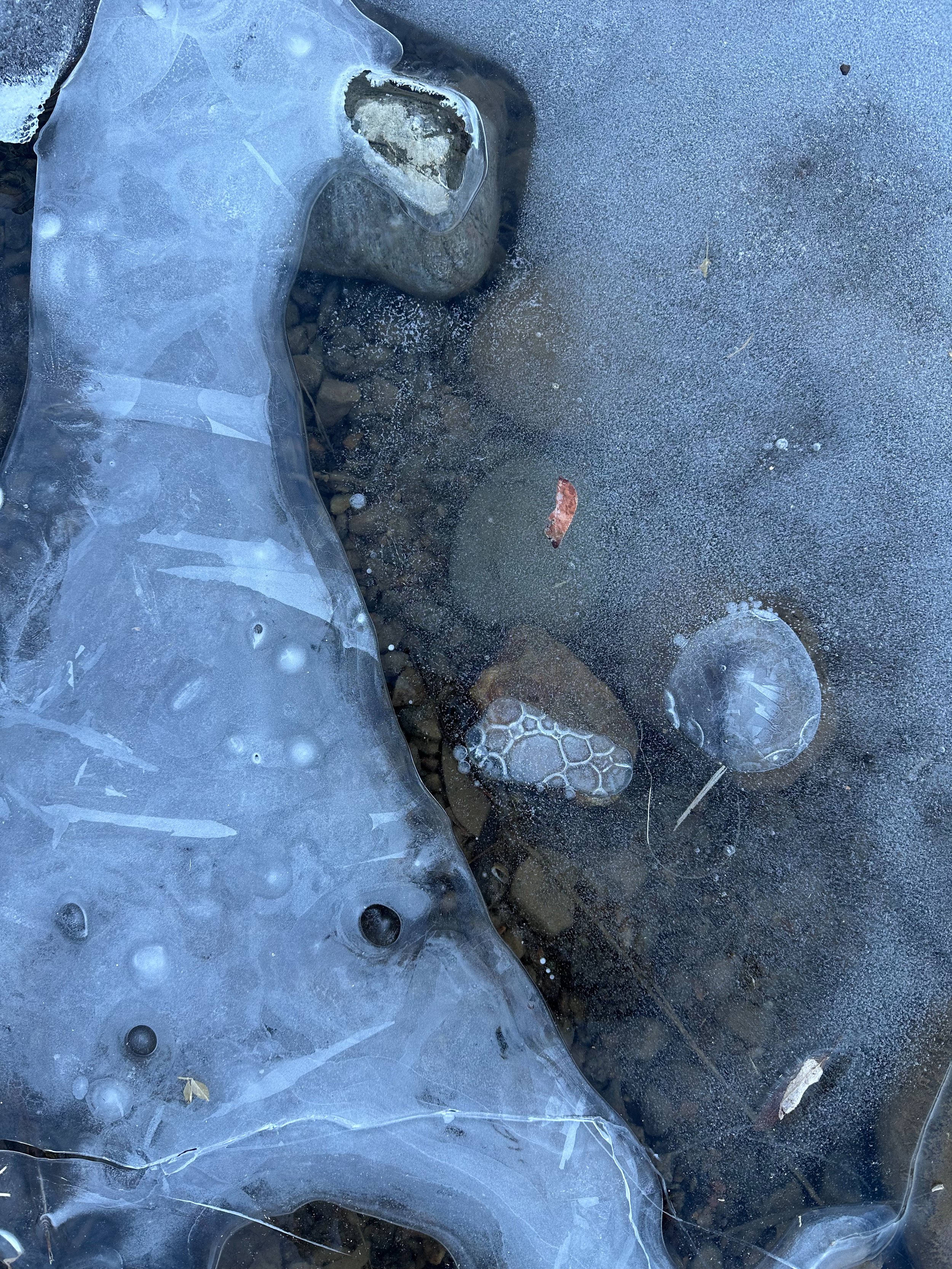
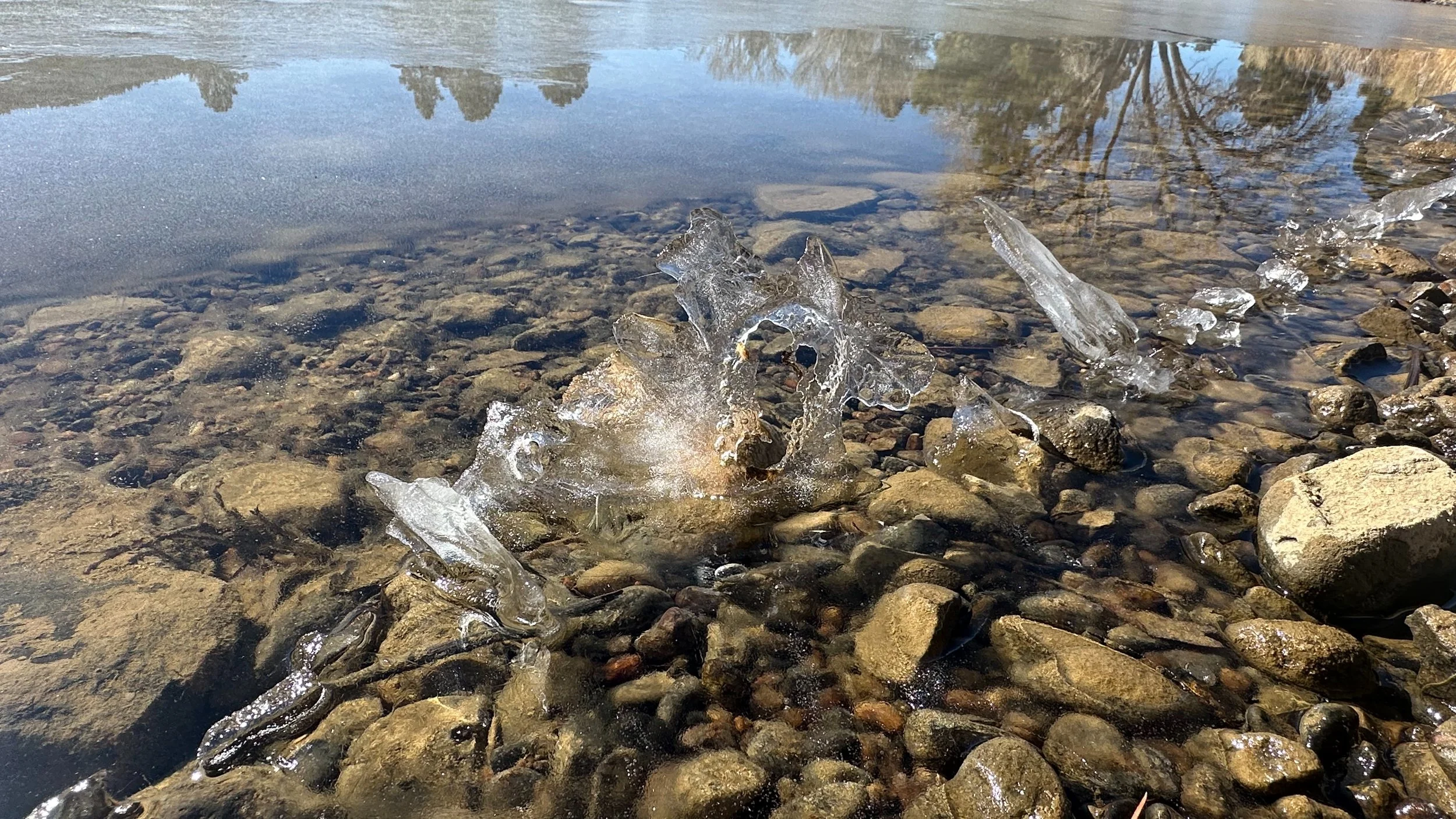
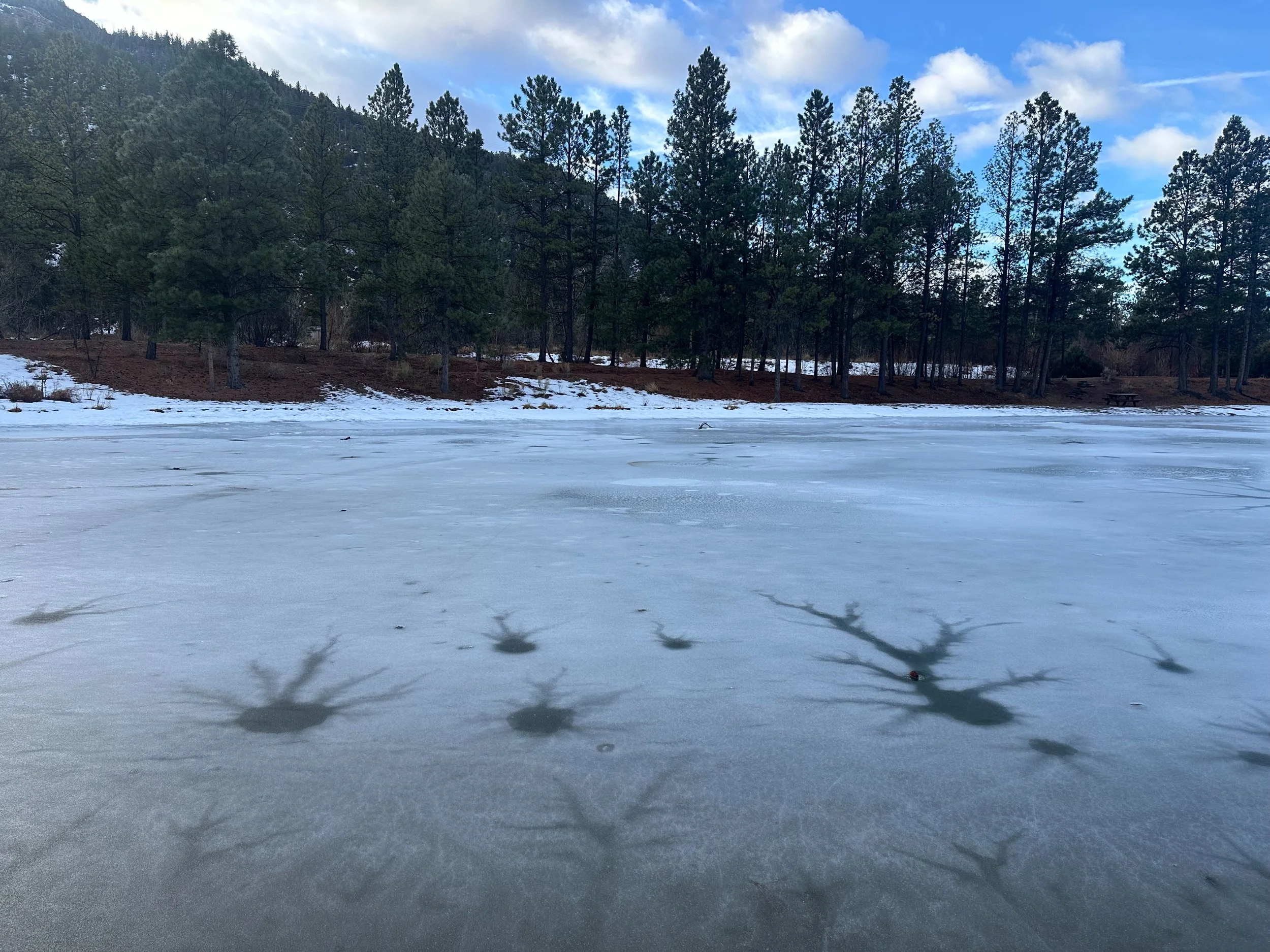
The Place
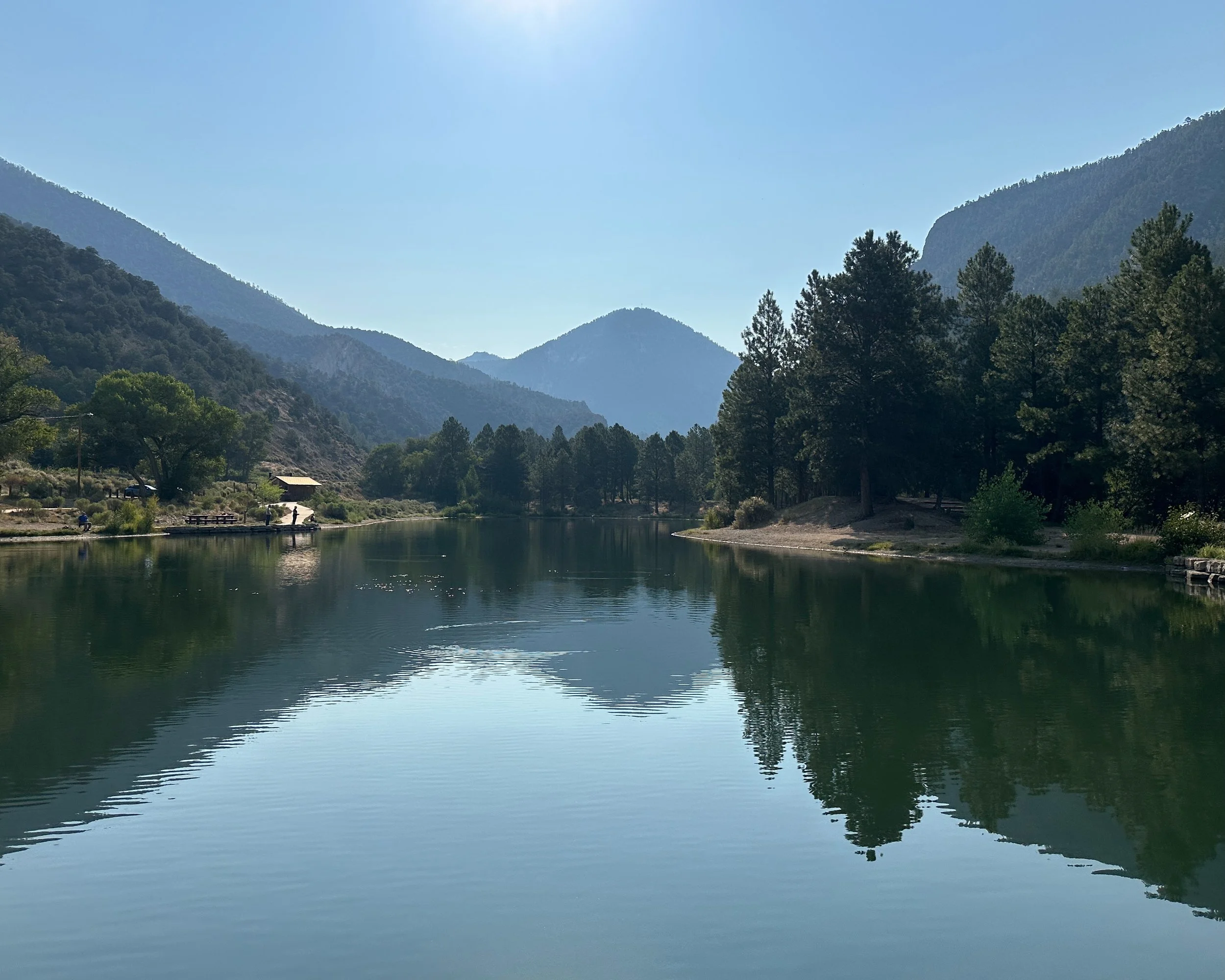
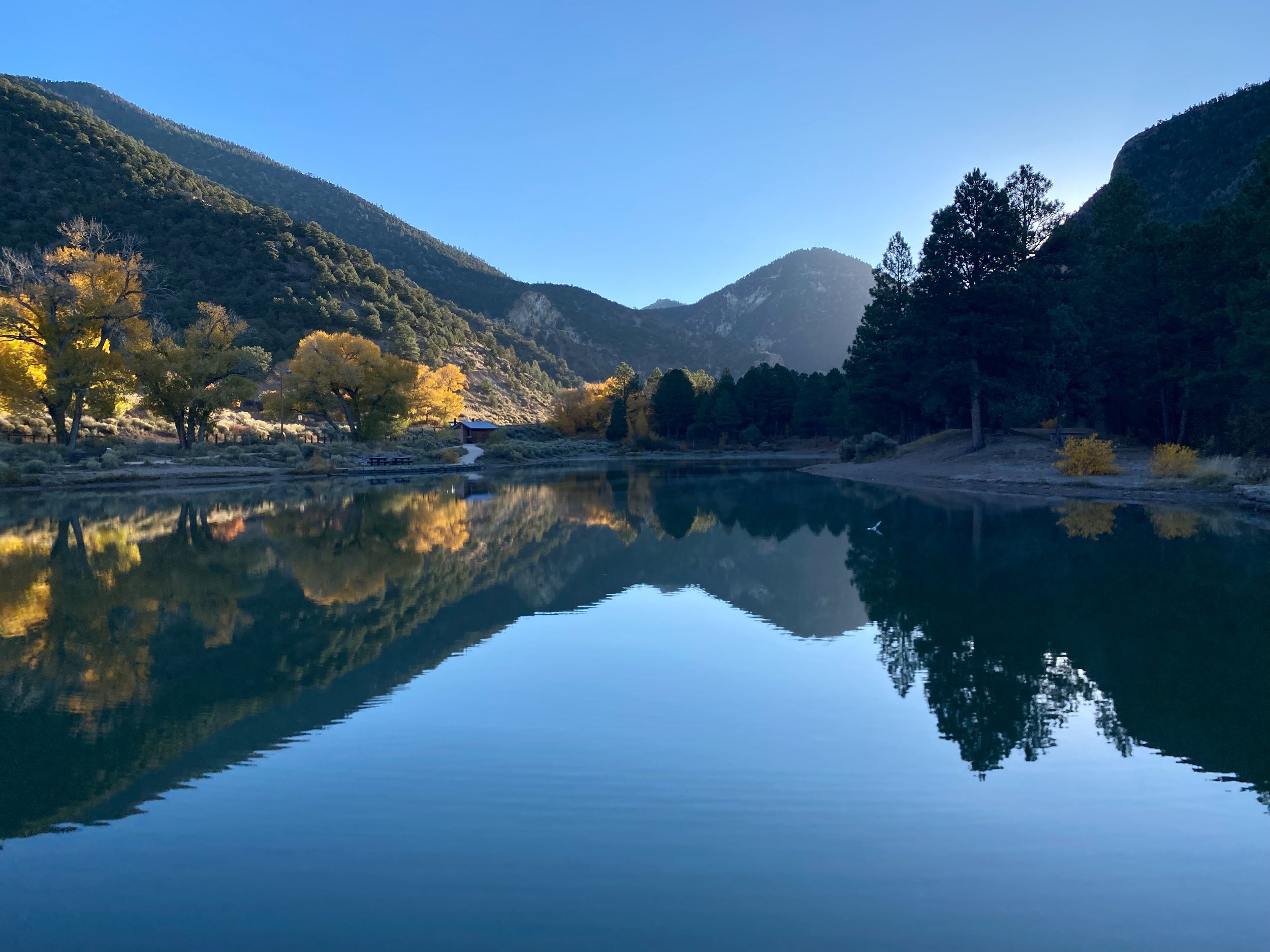
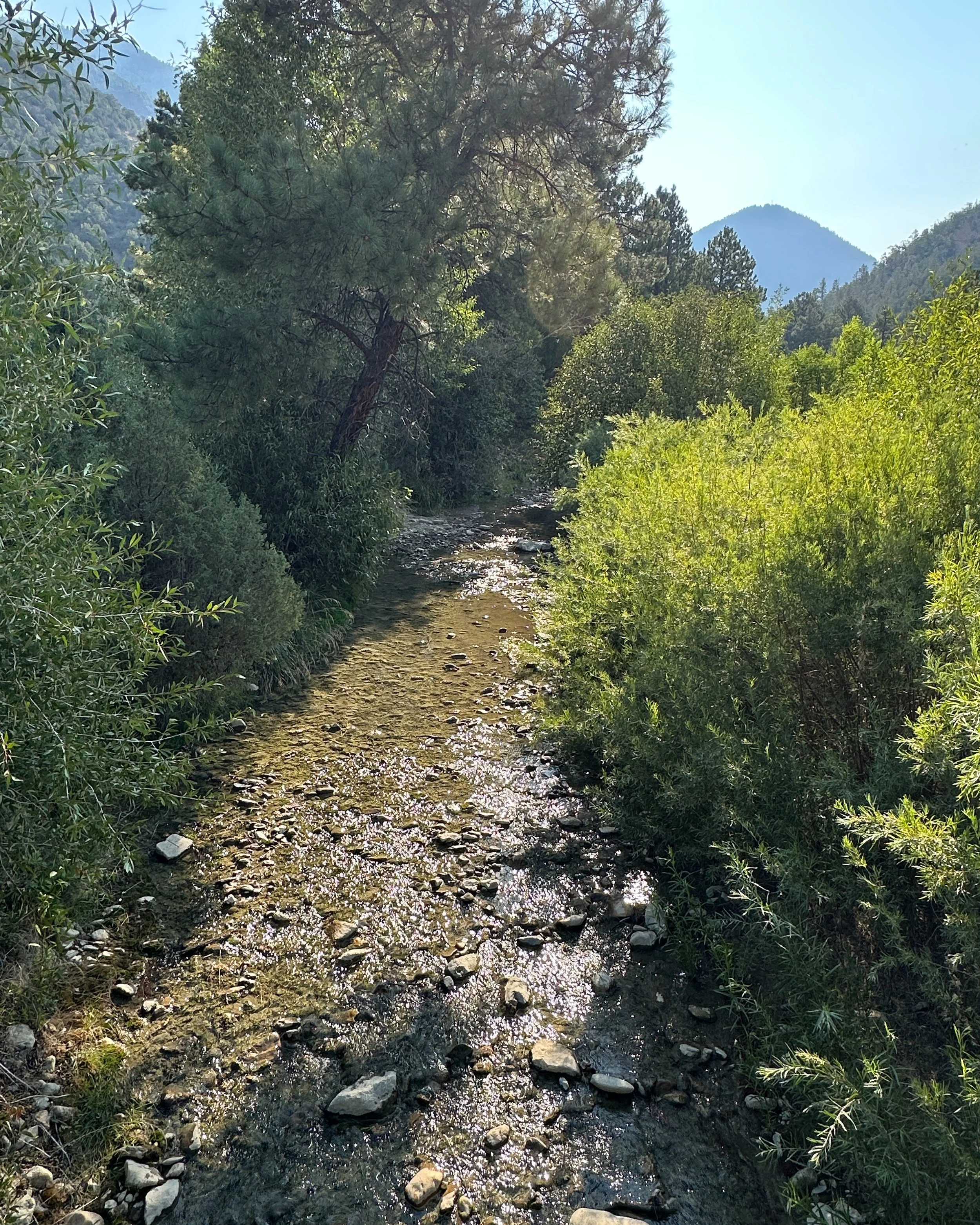
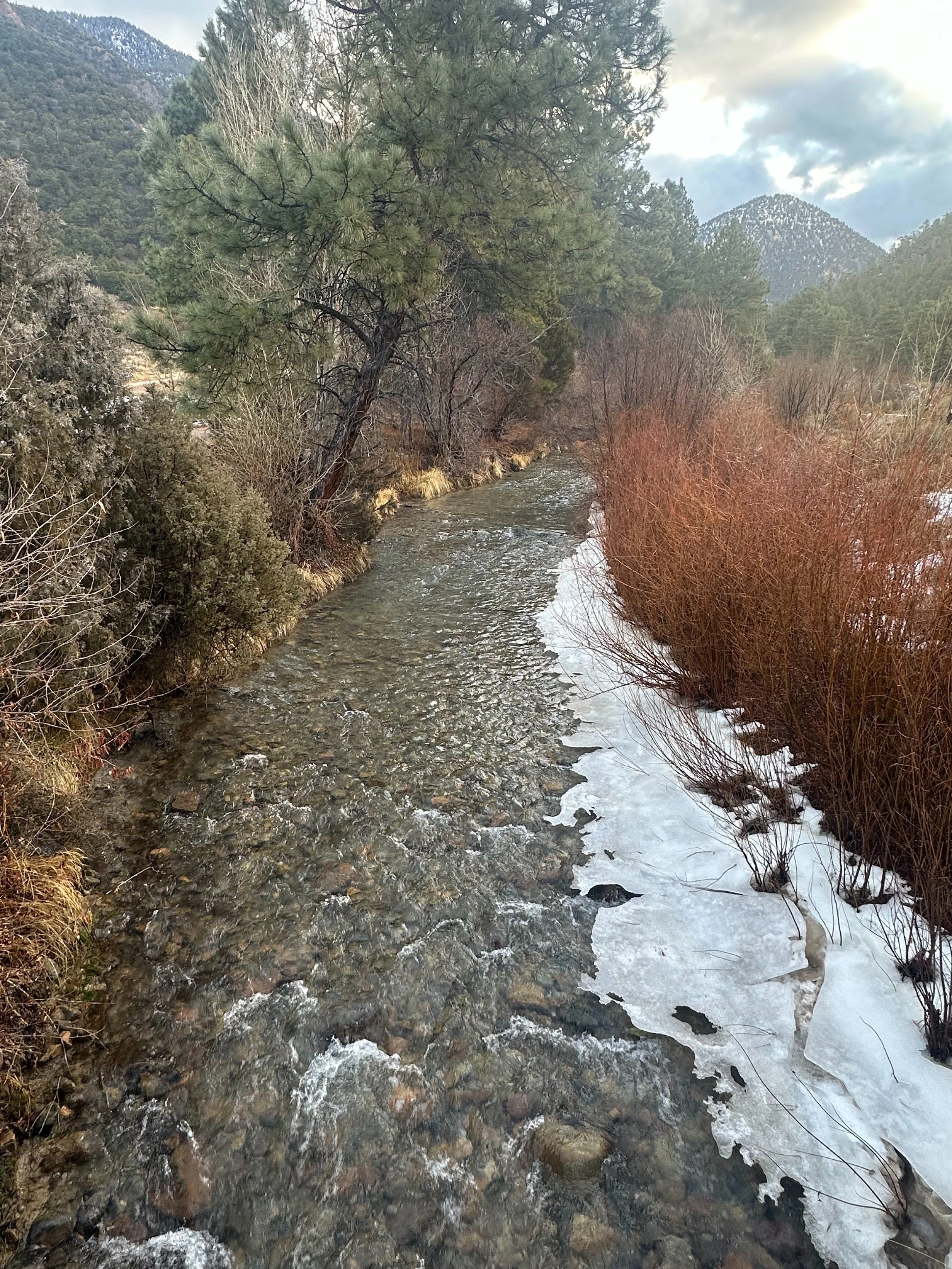
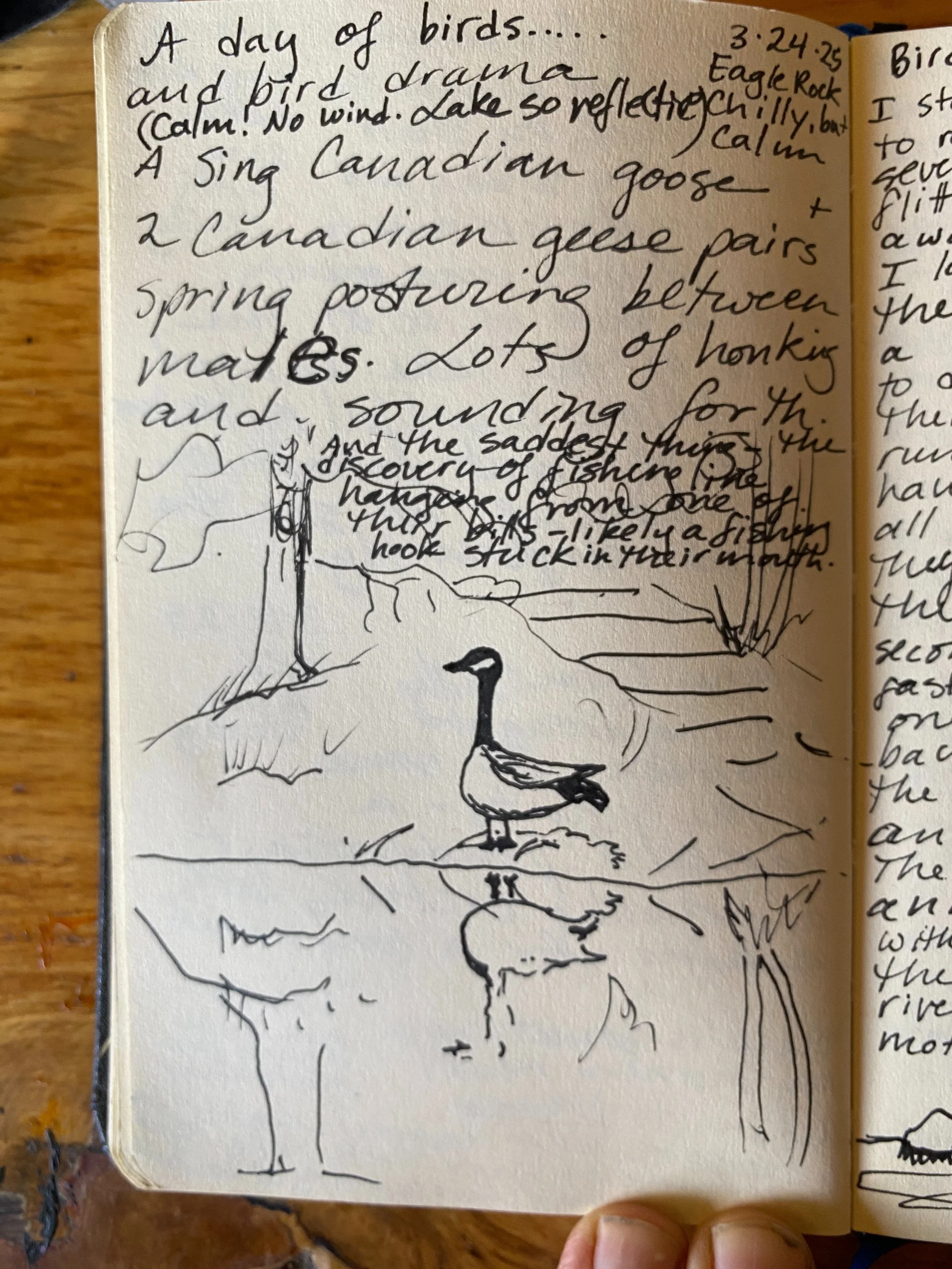
Eagle Rock Lake is a place of confluences: ancient and contemporary, still and rushing waters, riparian corridor and state highway, humanness and wildness. I find a potency in these meeting points. Through drawing, painting, cyanotype, photography, sound, material experiments, and acts of care I explore the ties that connect us to place, one another, and the more than human.
It's a landscape with a complicated past, shaped by mining, time, and an ongoing process of healing and change. This ecologically rich riparian site supports diverse wildlife and serves as a vital, accessible gathering place for wildlife and our rural human community. Following the Questa Mine closure and long-term environmental impacts, the lake stands as a symbol of ecological restoration and community resilience.
The project
The work grows out of curiosity, careful observation, and simple acts of noticing and care.
Guided walks, tea gatherings, and stories invite people to listen deeply, reflect and share with one another. Through these experiences, the line between "human" and "Nature" starts to soften, and there is a strengthened sense of belonging and mutual responsibility.
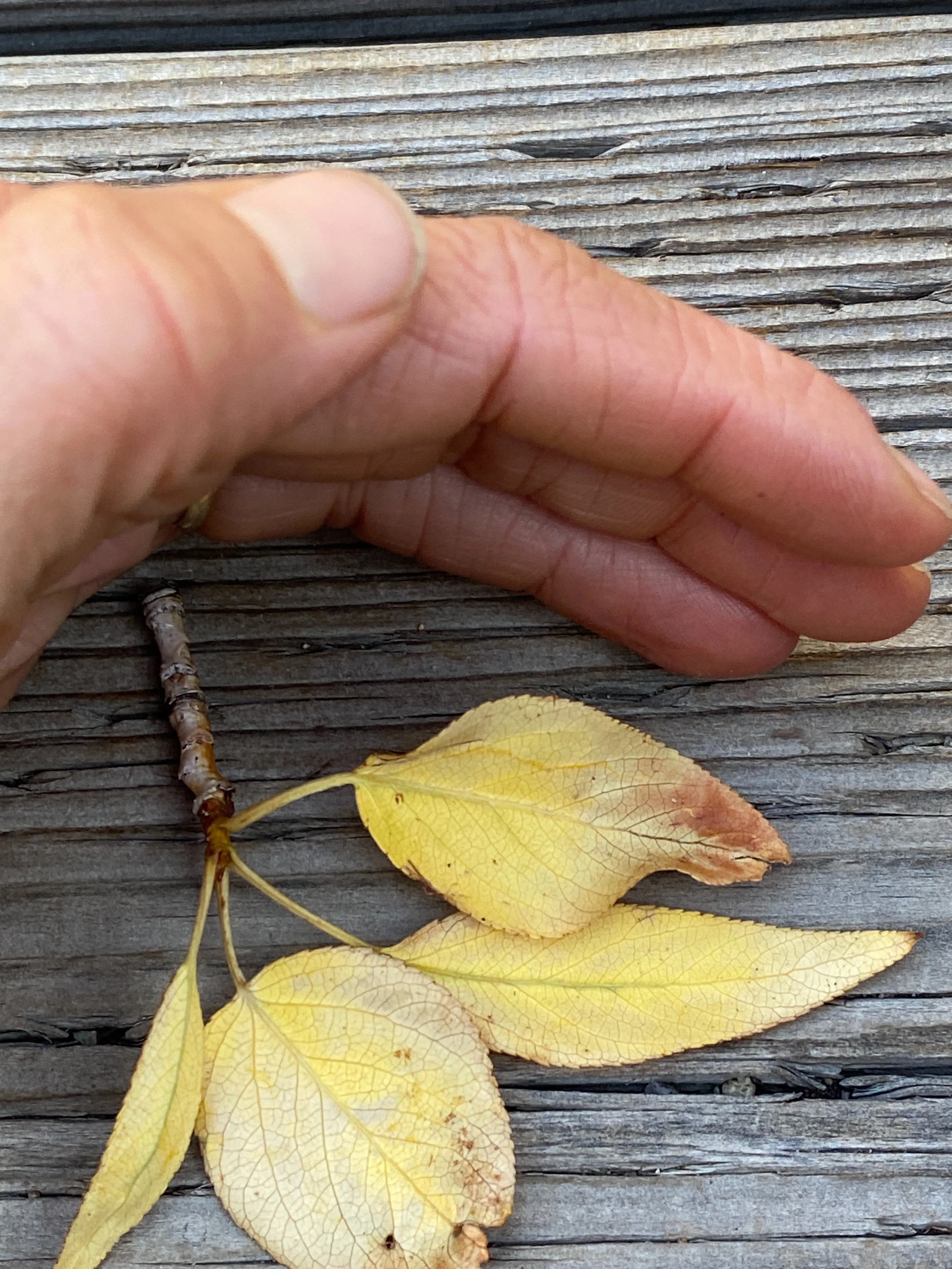
Hands-on, the project uses cyanotypes (sun-printed images), drawing and direct impressions with layers of local plants and collected trash to create visual "maps" of Eagle rock lake. It’s a way of examining our refuse, turning discarded objects into something worth pausing over, questioning and reframing waste as a resource, not something to be carelessly dropped or discreetly disposed.
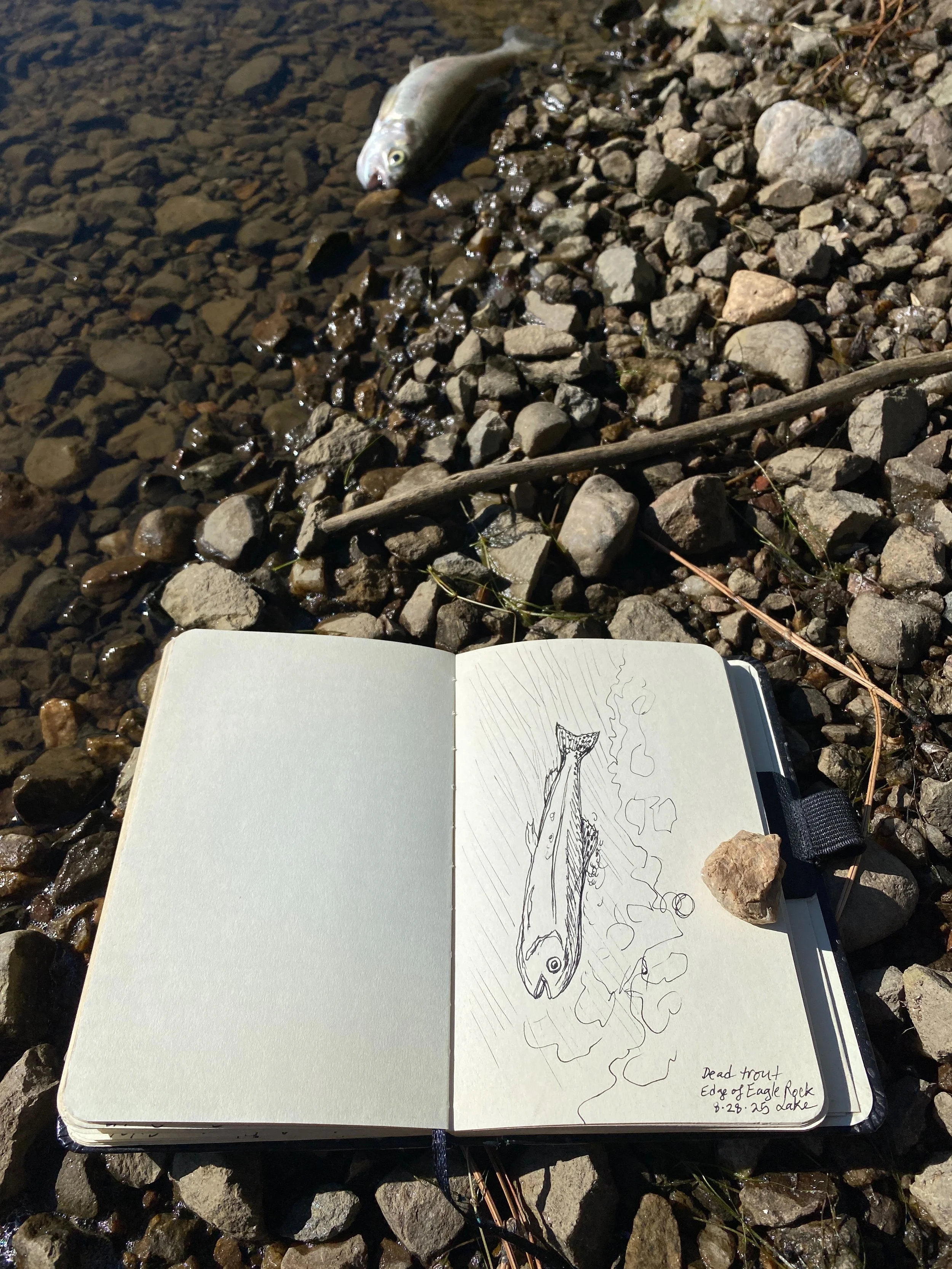
Daily trash collection along the lake does double duty: it's a service to the land and a form of data collection, revealing patterns of behavior and consumption and things like lead fishing weights and tangled fishing line that quietly harm the ecosystem.
At its heart, this project is about care, reciprocity, and working alongside the community. It draws on older, ancestral ways of relating to land as something alive, worthy of care, rhythm and respect. By helping people re-see, re-tell and create their own experiential story of Eagle Rock Lake, the project hopes to spark real shifts: in how people feel, how they act, and how they understand their place in a living, interconnected world.
Walking: A Personal Resilience Practice
No matter the season, no matter the weather, after I drop my kids off at school, I drive to the lake, walk, take pictures, reflect and connect…
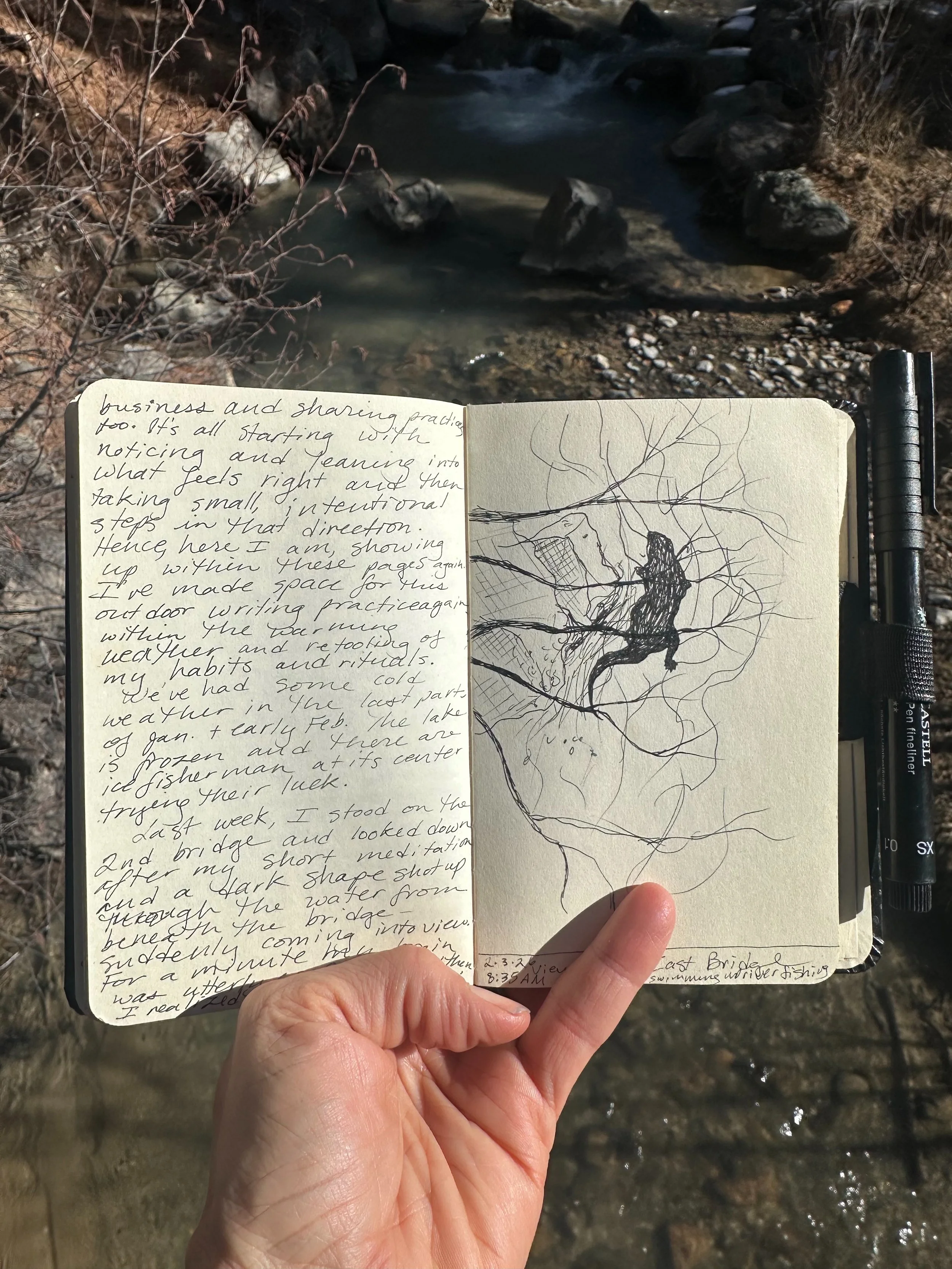
Guided by gentle curiosity, I arrive at the lake, then cross the first bridge over the Red River, pausing to let water carry away worry. My senses open. I listen, notice. Birds call, fog lifts, frost glistens, snow flutters, wind whips. Squirrels scamper, deer startle, buds swell, leaves unfurl, sun shines, rain falls, leaves turn, seeds disperse. At the second bridge, I inhale a sense of belonging. I walk the lake’s edge, retrieving discarded fishing line and hooks. Geese, dippers, and river otters revel. Beneath narrowleaf cottonwoods, I return to my car.
This daily ritual cultivates personal resilience, wonder, reverence, and kinship with the more-than-human world and the rhythms of the seasons. On these walks I carry questions with me; they bob along the trail with me and sometimes insight comes, but more often a new slew of questions. The playful formation of questions feels like a “parachute practice” to me - like exercising my imagination, forging new neural pathways and staying aloft on the winds of possibility.
What if we all found a practice like this? Might individual resilience ripple outward into community resilience, and over time global resilience?
Project Timeline
Foundation: Site-Based Research & Daily Walking Practice (August 2024–Present)
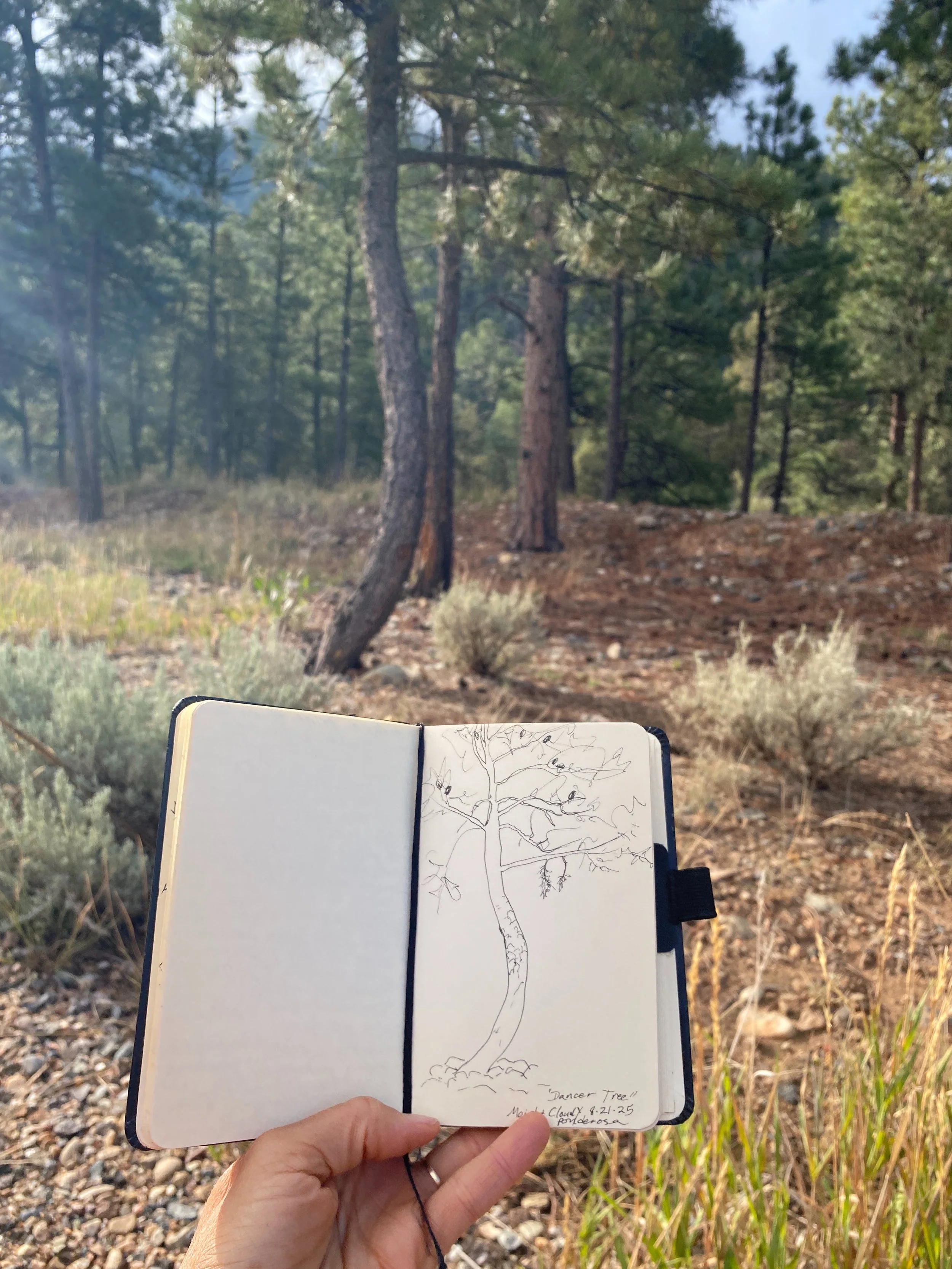
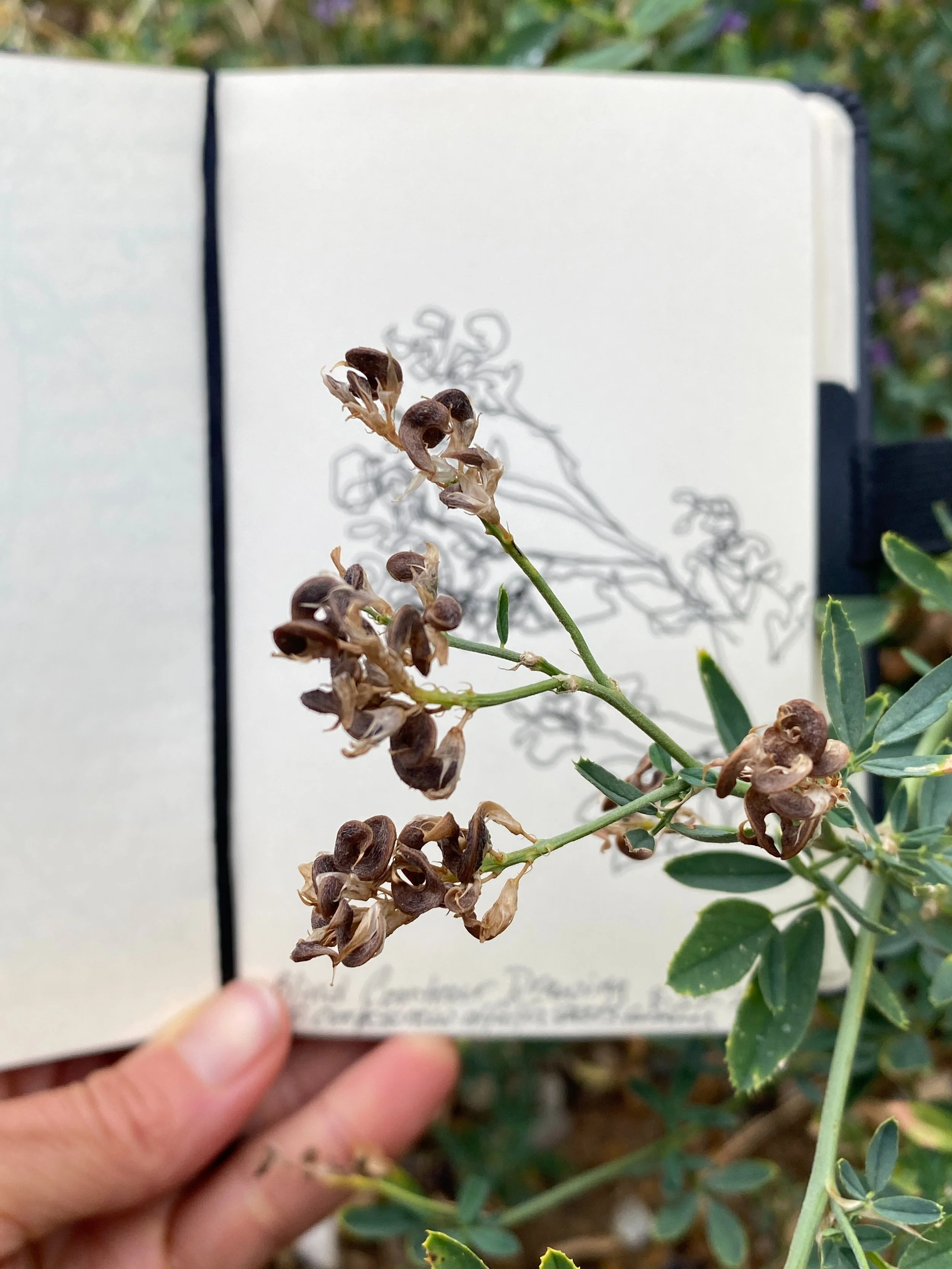
This project began, quite simply, with walking. Since August 2024, I've returned to Eagle Rock Lake four times a week, letting the rhythm of that practice become the project's foundation. Out of these walks grew a seasonal documentary and video practice I think of as "portraits of plants," a field notebook filled with observations, questions, ideas and the Plant Neighbors drawing and painting series. Slow and embodied, this daily attention is how Imprints of Belonging took root, through relationship with the land, built one visit at a time.
Development: On-Site Cyanotype Practice & Public Exhibition (May–September 2025)
In May 2025, I brought my cyanotype practice directly to the lakeshore, printing with plants, human traces, drawings and found refuse, gathered on site. New techniques and a cyanotype piece, measuring 3 by 4 feet emerged and this huge work became part of the Learnings from the Lake series which was to debut at Seasons of Resilience, a two-person exhibition with Nicole Thibodeau at the Wildflower Playhouse in Taos, NM (June–September 2025).
Engagement: Community, Material Research & Volunteer Role (August 2025–Present)
By August 2025, the project had opened outward to include the people who share this landscape. Conversations with lake visitors arose naturally and gave rise to occasional small-group walks. Around the same time, I began collecting trash from the site daily, transforming it into photographic documentation, cyanotype prints on fabric, and bundled sculptural forms. Waste became material, and material observations became part of my practice of paying attention. That commitment led, in February 2026, to my appointment as a Forest Service Volunteer Art Ranger, a role that formalized the stewardship and public engagement already at the heart of this work.


